Monday, March 30, 2020

Quarantine and Lent


The word "quarantine" has been thrown around quite a bit in recent weeks as the novel Coronavirus has continued to spread across the globe. Here in Missouri, we topped 1,000 confirmed cases in the past 24 hours, and it seems the worst is still coming. In the face of this pandemic, the public is being advised to self-isolate and those who potentially have been exposed to the virus are being placed in "quarantine."

I came across some interesting articles earlier this week about the history of the word "quarantine." Although versions of the quarantine concept have been practiced throughout human history for a variety of reasons, the word itself seems to have originated in 14th century Italy. In the mid-1300's, another pandemic, the bubonic plague, was sweeping across Europe. Around 1377, the Venetian-controlled port of Ragusa implemented a policy of trentino, a 30-day waiting period for ships coming from areas affected by the plague. Over the next few years, this waiting period was extended to 40 days, thus becoming a quaratino. This Italian word for "about 40" is the basis for our English word of "quarantine."
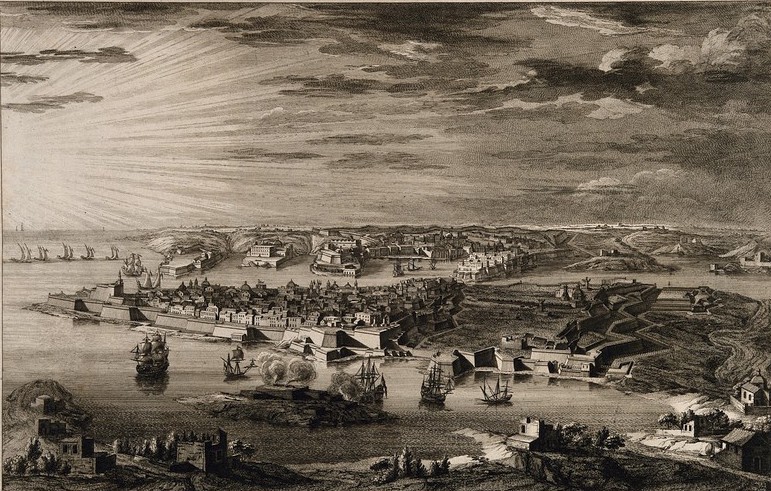
See the source image

No one is entirely sure why the waiting period was shifted from 30 to 40 days, but most scholars suspect it was related to religious reasons and the deep symbolism within Judaism and Christianity for the number 40. Indeed, it was not uncommon to find the number 40 used in other medical practices of the time. For example, mothers were often required to rest for "40 days" after giving birth to a child.

In the Bible, the number 40 carries significance and can be found in numerous stories. Noah rides out the flood for 40 days and nights. Moses intercedes with God for forty days after Israel makes the Golden calf. The people of Israel wander in the wilderness for 40 years. Saul’s Army cowers one fear for 40 days before Goliath until David arrives. Elijah lives off divinely provides food for 40 days as he fights depression while on the run from Jezebel. Ezekiel lays on his side for 40 days to symbolically bear Israel's sin. Jesus is fasts and is tempted by Satan in the desert for 40 days.

Now, what's interesting about the number 40 in Scripture is that it almost always seems to represent a time of isolation and testing. Look at the settings of these stories. A cataclysmic flood that destroys nearly all of humanity. Several stories of tempting in the desert. A prophet proclaiming the destruction of Jerusalem.

These were not happy times. They were times of temptation and failure. They were times of destruction and death. They were times of waiting, wondering if hope could be found. They were lonely times.

Incidentally, those of us who pay attention to the liturgical calendar know that we Christians also find ourselves embedded within another period of 40--Lent. For those who are less familiar with the lectionary or liturgical calendar, Lent is the 40-day season (minus Sundays) that begins with Ash Wednesday and culminates with Holy Week (Palm Sunday, Maundy Thursday, Good Friday, and Easter Sunday). Whereas Easter is the supreme day of rejoicing for Christians--a celebration of resurrection--Lent is a period of solemn reflection and lament.

During Lent, we take an honest look at our lives and our world and come face to face with their ugliness. We confront our own sins and attempt to grasp their full weight. We look toward the needy in our communities and dedicate ourselves to addresses the brokenness in our world. And ultimate, we stare into our own mortality and remind ourselves that death comes for us all.

This year, Lent began on February 26 (Ash Wednesday). Coincidentally, this was the exact same say that US officials announced the first confirmed case of community spread of the Coronavirus in the United States, a benchmark that moved us into the current crisis. And in the 30 days that followed, our news feeds have been consumed with nothing else and this tiny, invisible threat has completely and devastatingly turned our world upside-down.

See the source image

The irony of this does not escape me. Literally as soon as those of us in Ash Wednesday services received the ashes on our foreheads with the charge to "Remember that you are dust, and to the dust you shall return," our nation was seized by fear of a virus that has been killing thousands worldwide. The message of Lent that we are mortal and are not truly in control could never be more clear.

And so, as I sit here, all of these threads begin weaving themselves together. A severe pandemic centuries ago created the concept of quarantine with a connection the the Biblical number of 40. Christians today are travelling through our own period of 40 days. In the midst of those 40 days another pandemic attacks us pushing us back into quarantine. It all comes full circle.

But this is why I appreciate the liturgical calendar. It gives me a framework of meaning and always seems timely--inspired by the Spirit if you will. At the moment, the world does not know how to respond. The ugliness of a period of testing, as all biblical periods of 40 were, is that they expose the darker sides of ourselves. We have seen fear and panic consume people because they feel a lack of control. In order to try regaining control, people have also resorted to hoarding and greed. Gun sales have also surged, not because a bullet can stop a virus, but because people are preparing for a fight or are willing to kill others who might threaten their property. The worst sides of humanity can come out in times like this.

Then there are also feelings of hopelessness and desperation. As a result of social distancing, everyone (both introvert and extrovert) are realizing just how important community is and how painful it can be to live with it. Couples are getting married without their families present. Mothers are giving birth without their husbands at their sides. Children are unable to visit their aging parents. Churches are unable to gather in person. School children are unable to see their friends. And stay-at-home parents are feeling depression settling in as their are locked inside their homes without adult interaction.

But the message of Lent also speaks most powerfully in times like this. Lent reminds us that grief and lament are ok in the sight of loss. The New Testament text in the lectionary for this past Sunday was about Jesus raising up Lazarus from the dead. Yet in that passage comes the shortest verse in Scripture--"Jesus wept." It is a reminder that even God Himself cries and grieves about the pain of this life.

Lent reminds us that the isolation and depression many of us temporarily face because of the virus is also the daily reality for so many of our neighbors. While we may be able to go back to work and our normal lives with friends, co-workers, and family in a few weeks or months, countless Americans do not have that luxury. There are senior citizens stuck in nursing homes with no one to visit them. There are adults and children who struggle with depression as a normal part of life. There are women who live in abusive relationships who have been isolated from every loved one by their abuser and for whom every day feels like a prison. As we experience similar emotions as them in this time of self-imposed isolation, we find solidarity with them and are hopefully motivated to live our lives in compassion towards those who see no end in sight.

And finally, Lent reminds us that we are not in control. That is the American myth. We crave control and can even do a decent job most days of creating some facade of it. But in the end, crises like this one rip back the curtain and expose our complete lac of control. But if we are paying attention to the message of Lent, we would not be so blindsided by this reality because we would know that it was a mirage all along. No matter how hard we try, the wilderness will always come. No matter how much we pull up our bootstraps, sometimes the whole rug of the economy gets pulled out from under us and knocks us down anyways. No matter how much we exercise, eat healthily, or medicate, death will always come for us. And sometimes, as some are finding out now, death comes much earlier than we might hope.

But the hope of Lent is that we need to let go of control in order to find a greater treasure. In the words of Jesus, those who lose their lives for His sake will find life. Those who grieve will be comforted. Those who lowly are those who are blessed. It's backwards. It's painful. But at moments like this, it's what we need.

So may our quarantine (both of the virus and of Lent) be a time of reflection of what truly matters in life and thus become a transforming period leading us into the resurrection of Easter.


Friday, June 1, 2018

Give him the jet; We made him


Recently, several news networks carried the story of a Louisiana preacher named Jesse Duplantis who made a video appeal to his followers to help him raise $54 million dollars to purchase a new private jet (Thanks to my friend Heather for posting this story and bringing it to my attention). You can watch his full video here. According to Duplantis, the jet is necessary because his current jet is unable to go anywhere in the world on a single tank of fuel, whereas the new jet can. Therefore, being able to hop anywhere in the world "in one stop" will enable him to "preach the gospel all over the world" for cheaper.

Immediately after publishing the video, negative and critical comments started flooding in (rightfully so), enough that Duplantis appeared personally on news stations and even issued a second video on his website to defend himself.


We really shouldn't be surprised at the apparent greed of powerful men and the gullibility of their followers. Such realities have always existed both inside and outside the church. Selfish appeals from televangelists are also nothing new. Yet, while it's easy to condemn and criticize hucksters like Duplantis (and such criticisms are deserved), I couldn't help but wonder if we should go ahead and buy him his jet. After all, we are the ones responsible for his appeal.

Duplantis and his ilk do not arise out of a vacuum. The represent many of the values American Christianity and evangelicalism has come to extol, whether consciously or unconsciously.

First, American Christianity has always mirrored society in creating celebrity cults. Such celebrity worship is obvious in the broader culture. A perfect example is the recent multi-day hullabaloo over Roseanne Barr's racist tweet that led to her show getting cancelled. While an unfortunate reminder that racism is still very prevalent today, it was ridiculous how much airtime a single tweet received. Even more ridiculous was the fact that many respected news outlets talked about how the President of United States finally "broke his silence" about the tweet and the show's cancellation (as if the President has nothing better to do than weigh in on celebrity gossip and network lineups). The focus was not really about racism, but about the celebrity.

Sadly, the church is no different. We fill stadiums to witness the spectacle of preachers like Billy Graham, Joel Olsteen, Matt Chandler, Beth Moore, Rob Bell and countless others. Congregations are no longer satisfied with small communities, but must become "mega-churches" centered around a charismatic, well-groomed (often male) celebrity preacher. The best selling books in Christian bookstores are (not incidentally) written by pastors of said mega churches. Our worship leaders get major records deals and utilize the newest, hottest instruments, sound boards, and lights to give us spectacle worthy of U2 or Coldplay. We love our holy celebrities and are willing to pamper them like the kings and queens we believe they are. As such, we really have no right to critique Duplantis for acting like a celebrity when much of the country treats their own pastors the same way.

Second, American Christianity has implicitly taught that sharing the Gospel is the pastor/preacher's job. From the get-go, Duplantis assumes he needs a jet because he assumes it is his job to go across the world personally and speak about the "gospel." Sadly, such a perspective really should reflect a failure of his ministry more than a success in some ways. If his ministry were actually changing lives, then the fruit of that life change would be thousands or millions of folks who are also taking the Gospel into their own communities all around the world. He would not need to frantically fly all over the place. After all, Jesus only preached in a tiny square of the world, but his message is now reaching the ends of the earth because He created real, lasting, transformative change in His disciples.

However, before we criticize Duplantis, we must recognize that most of our churches operate in the same manner. It is the preacher's job to teach and preach, and our job to sit passively and absorb. We are instructed to "bring our friends" to worship services so they can hear the Gospel. Our pastors are seen as religious professionals and experts who do the "real work" of ministry. But this is not how it should be. A pastor's job is to equip the congregation to be the church in its community. Every member is a minister. As long as we continue to view our own pastors as the primary evangelist, teacher, and discipler, then we might as well support Duplantis in his effort to get a new jet because our ecclesiology supports his need to personally travel the world to accomplish his work.

Finally, American evangelicalsim believes in the same truncated gospel as Duplantis. Consistent in Duplantis' request is the idea that "the gospel" is all about "saving souls" in a spiritual sense. While the plan of salvation is certainly good news and of utmost importance, it is not identical to "the Gospel," at least not the one Jesus preached.

In short, the "Gospel" is the good news that the history of Israel is now fulfilled in the life, work, death, resurrection, and ascension of Jesus Christ who is bringing His Kingdom to earth. This good news includes the plan of salvation, but is not limited to it. Implied in the gospel Jesus and His disciples preached is a demand to participate in God's Kingdom here and now, which means also working in physical, tangible realities, not simply abstract, spiritual truths. "Good news" means taking care of the poor and oppressed, standing up for truth and justice, and imagining creative ways to tell the story of God in our communities. It means confronting both the personal, invisible sins within each of us that keep us separated from God and confronting the societal, visible sins that alienate all of us from the good life God created in the beginning.

A $54 million jet has rightly been condemned as a wasteful expense when the same money could benefit so many other ministries who are proclaiming the gospel in more holistic ways. How many hungry children could we feed in our communities with that money? How many expecting mothers could we house who are debating abortion because of financial fears? How many Bibles could we print? How many water wells could we drill? How many foreign missionaries already embedded in foreign countries could we support?

But, maybe we don't deserve to ask those questions because many of us believe in the same gospel as Duplantis. We believe in a gospel which says the only thing that matters is getting people to "believe" and say a prayer. All that matters is "winning souls." If that is our gospel, then of course it makes perfect sense to send a man all around the world, pack stadiums and parks full of as many people as you can, and use lights and emotional music to prompt them to come to the altar. I'm sure you can efficiently rack up a ton of "decisions" with a private jet.

So, why not? It may seem crass, but his request may be an honest presentation of our biggest faults we hide under the rug as American Christians. So, let's buy him his jet. He might be more effective than us at fulfilling our own vision of church and the gospel after all.

Monday, April 9, 2018

"The Crossing" and Israel


I recently watched the pilot episode of ABC's new sci-fi drama "The Crossing," created by Jay Beattie and Dan Dworkin. The show definitely holds some potential, and it will be interesting to see if it ends up being binge-worthy or a flop. However, I am intrigued to continue watching how the show develops because the opening episode seems to be developing some interesting themes. In particular, it seems to be setting the stage to use the Old Testament story of the people of Israel as a motif within the show.


If you haven't seen previews for the show or the pilot episode yet, the basic premise of the show is that a rural sheriff (played by Steve Zahn) discovers hundreds of bodies that wash up his Washington beach, including a few dozen survivors. Federal agents quickly gets involved and shut out local officials. As the story unfolds, the survivors disclose that they are refugees from the future. Fleeing war and an oppressive power, they utilized a new time travel technology, but something went wrong and they ended up underwater in the ocean instead of on land. Sheriff Ellis and some federal agents have safety concerns, especially since some of the survivors warn of "others" who have special abilities, some of whom may have crossed over earlier.

In watching the first episode, I couldn't help but notice a number of similarities between the story of these refugees and the story of Israel in the Bible. For starters, the show's title appears to reference the time travel event in which the refugees "crossed" back into the past by passing through the ocean. This event itself could be seen as a powerful biblical image, a group of oppressed people passing through the waters (Pacific Ocean/Red Sea) to escape their oppressors.

Furthermore, like Israel, hope they have entered a "promised land." One refugee describes the America of the past (our present day) as a much more ideal and free place than the one the left. For these refugees, 2000's America may seem like a land full of milk and honey. However, just as in the Pentateuch, the post-oppression journey is not an easy one. Those journeying to freedom find themselves to be small and powerless compared to their neighbors. And like Israel, the refugees in the crossing appear to be entering a wilderness period as the federal government only moves them into temporary housing in the middle of the woods.


I don't know if the show's writers are aware of these similarities or not, but one final piece makes me suspect they are. Less than five minutes into the show, Sheriff Ellis has a conversation with a little girl he pulled from the water a few hours earlier. When she tells him her name is Leah, the sheriff remarks, "That's in the Bible, isn't it?" Interestingly, the girl responds with a blank stare, confused about what a "Bible" is.

It is this line that made me start to pay attention to the biblical themes in the episode. Indeed, as I listened to the names, there definitely seems to be a pattern--all the refugees have biblical names: Leah, Hannah, Rebecca, Caleb, Thomas. Even the names themselves seem to be significant. For example, in the Bible Leah is the daughter-in-law of Rebecca, whereas the show's Rebecca takes on a mother role to the girl Leah. Likewise, the one refugee who seems to be skeptical, self-interested, and perhaps "doubting" is named Thomas.

The only exception to this rule (so far) is a refugee named Reece, who incidentally is different from the others, being the only one to demonstrate special powers and the only one not rescued on the beach. So perhaps her lack of a biblical name is also significant. In contrast, Sheriff Ellis also has a biblical name as his first name is Jude. Perhaps this is an indicator that he will be an ally to the refugees.

The show is clearly poised to deal with a number of social and political issues. For instance, the first episode already has touched on our treatment and views of refugees and immigrants, something our country has been dealing with in real life. Of course, it's hard to determine what directions a show will go and what themes will develop simply from the pilot episode, but if the above allusions are intentional, this show may end up conveying some really potent messages by way of biblical imagery. Perhaps these refugees will find themselves on a similar journey as Israel--oppressed and killed because of their identity, a miraculous escape through water to safety, only to face trials and tribulations in the wilderness as they journey towards a promised land of freedom and prosperity. And with superpowers apparently to play a role, one wonders what "giants" they may find in the land along the way.

Update:
Sadly, ABC recently made the decision to cancel the show after its first season. It would have been interesting to see how the show developed over time given that a number of biblical themes seemed to persist throughout the first season. For example, the trend with biblical names continued consistently, the city where most of the plot takes place is called "Port Canaan" (an invented city name), one character is healed with the blood of another character, and there are numerous references to religion or churches both in dialogue and architecture. Who knows? Perhaps another network will pick it up one day.

Tuesday, November 14, 2017

Anatomy of a Keurig


Timeline of events: Roy Moore--an Alabaman Republican candidate for a US Senate seat--is accused of sexual harassment and assault by several women. Roy Moore refuses to back out of the race. Roy Moore does an interview with Sean Hannity. Many people feel Hannity glossed over the allegations. Several advertisers, including Keurig, pull their advertising from Hannity's show in protest of his apparent lack of outrage. Some Hannity fans destroy their Keurig coffee makers.

Really?

Yes, really. And here's an example:

https://twitter.com/CollinRugg/status/929777702537543681

As the Keurigs shatter on the ground, it seems their pieces reveal a lot about the state of public discourse these days.

First, I'm struck by the language of "offend a liberal" in the above tweet. This is language that is hardly limited to this instance. Google "offend a liberal" and you can find countless memes and images with the same mentality (interestingly you get many of the same conservative memes even when you Google "offend a conservative"). Some progressives likely have the same approach as well, albeit with different language. Whether we label others as "libtards," "libiots," "Teabaggers," or "Re-thug-licans," the effect is the same. And of course, both sides love to throw around the "snowflake" label.

You can completely forget about higher ideals like listening to the other side. We've even moved past trying to persuade the other side. All that matters is winning and upsetting one's opponent. If we can annoy and "offend," that's all we need to do.

I'm also struck (but not surprised) by the oversimplified view of others demonstrated. Seriously, what "liberals" are you hanging out with who would be offended by you destroying your overpriced coffee machine?! I know the friends I have who hold to more progressive/liberal political views wouldn't be "offended." Most of them would just laugh at you. You probably made their day by showing how easily you get "offended" by an advertiser. But, we live in such isolated echochambers that we don't know what people on the other side of the fence are really like anymore. All we're left with are caricatures, stereotypes, and strawmen.

Lastly, it shows how ridiculous we sometimes can be in our "protests" when living in a materialistic culture. We burn jerseys of NFL players we disagree with. We destroy coffee makers of companies who upset us. We refuse to eat fast food chicken because of the owners' position on homosexuality. It's all ridiculous. Ghandi is probably rolling around in his grave wondering why he went on a hunger strike if all he could've done is threw some British furniture out a window. The reality is such "protests" don't actually cost anything. You know those individuals will just turn around a buy another jersey, coffee maker, or chicken sandwich (maybe even from the same place). Where there's no sacrifice, there's not really much substance to that protest.

The sad truth is our public dialogue is utterly empty. It's not even fair to call it a "dialogue" anymore. If you put several angry men together in a room to shout and throw things at each other, is that really a "conversation" just because words exist? Because that's a more apt description of what's happening.

We're not even really concerned with winning arguments any more. We just want to win, period. Dominate the opposition at all costs. But this is a dangerous position. If winning is the ultimate value, then we will be willing to sacrifice our ethics, morals, and our very souls to do so. But once we've sacrificed everything we care about upon the altar of the god of power and triumph, what will we have left? Nothing except a bunch of broken plastic bits, caffeine withdrawals, and a video testifying to how idiotic we look.

Tuesday, September 26, 2017

What's in a Symbol (or a Flag)?


A little over a year ago we had the same debate: Should NFL players stand or kneel during the national anthem. A little over a year ago I blogged about this. It seems like we're just on repeat now, or that America is simply a skipping record.


Honestly, I don't have much of anything new to say from last year,  but as we enter Round 2 of the NFL-National Anthem debate I have thought more about the symbol of the American flag. It seems that Americans have widely different perspectives on what the flag represents, and this lies at the core of our disagreements.

For most white Americans, we tend to see the American flag in terms of our country's ideals. For most white Americans, the flag represents the best of America. It represents freedom, sacrifice, justice for all, equality, and heroism. We speak in terms of the flag representing what we fight for. In light of this, it's only natural for white Americans to get offended when other Americans use the flag as a site of protest. For many of us, we realize our country is not perfect, but for white Americans the flag tends to represent what we hope to strive toward.

However, for many other Americans (and for others around the world), the flag has additional meanings as well. While the flag still does represent the ideals of America, for many minorities in this country, the flag also represents the institutions and governments that have often oppressed and discriminated against them. There is a realization among non-white Americans that the flag is not merely a symbol of our ideals, but also represents real people, real government, and real institutions.

For a Native American who ancestors were slaughtered by soldiers carrying this flag, the American flag can't help but be a reminder of genocide.

For an African American whose grandmother was denied the right to vote at a courthouse flying this flag, or whose father fought in a World War under this flag only to have the same nation's Housing Department deny him access to a home loan or GI benefits, this flag can't help but be a reminder of discrimination.

When an unarmed man with no violent history is shot dead in his car in front of a child by an officer with an American flag on his police car, the flag loses some of its luster.

And while many around the world do view the American flag as a symbol of hope, freedom, and leadership, there are also many around the world who have been harmed by our international policies and foreign wars and who see the flag as a symbol of American imperialism and meddling.

For people who have experienced oppression underneath the American flag, the flag does not just represent American values and ideals, but also "the republic for which it stands"--a republic they know too well to be harmful to their lives in its current and historic states.

In addition to these differences in perspective, the two go-rounds with the NFL have highlighted another difference. White Americans seem especially quick to connect the American flag to America's military, even when soldiers or military action are not even part of the discussion. For instance, none of the NFL players choosing to kneel during the national anthem have made any statements against war or America's troops. Rather, they hope to point out that the America the flag currently flies over is not the America we want it to be when it comes to race relations.

However, for many Americans (again, mostly white), any perceived slight against the flag it viewed as an attach on America's military and soldiers. The flag ceases to represent anything else and becomes a physical embodiment of our veterans' bravery and sacrifice.

This is very different from the perspective of those protesting. For those protesting, the flag can represent so much more than simply America's warriors. It can represent America's hopes and dreams, but also represents a government and a nation that currently do exist in reality, and that reality is far from perfect.

In summary, what we have is a clash of worldviews surrounding how to interpret the flag. For most (white) Americans, the flag represents America's ideals and war heroes. As such, it ought not be connected with our failings (which most white Americans prefer not to think about or like to pretend is only in the past anyways). Therefore, the flag deserves the utmost respect, even when our country does fail. Failing to show complete reverence for the flag is identical to disrespecting the values and ideals the flag represents (as well as the soldiers who fought for those values).

However, for other Americans, the flag cannot be disconnected from real places, real institutions, and real times. For them, the flag is not merely a symbol, but is an actual piece of fabric that waves over post offices, capitol buildings, armies, and yes, even over unjust actions. It's not that they hate America in its ideal form; they simply hate how America fails to measure up to the ideal. In this view, the flag is not infallible and is open to challenge the actual nation is flies over achieves the ideals so many have fought for. As Kaepernick stated last year, he will protest until "[the American flag] represents what it's supposed to represent."

However, until both sides can find a common ground on how to understand the symbolism of the American flag, we are cursed to continue talking past each other and repeating this conversation every football season.

Sunday, August 13, 2017

Racism: What I Have Seen


Over the past few days, our nation's attention has once again been turned to the topic of race. This time, it was because of violence that began when a group of white nationalists gathered in Charlottesville, VA for a rally. Counter-protests soon formed, and over the weekend 3 people lost their lives, including one woman who was hit by a car that drove through one of the counter-protests.

White Supremacist rally in Charlottesville, VA (Aug 2017)

For many white Americans, this all may seem baffling. Some white Americans are still amazed that such hate still exists. Meanwhile, others still find a way to shift the focus and blame onto groups like "Black Lives Matter." Still others point to the decision made in Charlottesville to remove a Confederate statue a few months ago as the inciting incident.

But, events like Charlottesville are merely the tip of the iceberg. It's not as if racism hasn't been pulsing throughout our country this whole time. The reason so many whites have a difficult time dealing with situations like this, or only speaking up against racism when it reaches this level of obviousness is that we don't usually have to think about race because of white privilege. When you benefit from white privilege, it's also harder to see that same privilege. It becomes your culture and your worldview, and as such is difficult to notice until you have an encounter with other cultures and stories.

So, what I hope to do in this post is speak to my friends of European descent. I think one reason white people struggle to handle topics of race well is that we are not trained to see racism. And when we are smacked in the face with it, or when others ask us to give up some of our privilege to pursue an equal society, we tend to get uncomfortable or even defensive and hostile. So, in this post, I want to share a few of the ways in which I have seen racism rear its ugly head so my white friends can begin to get just a sliver of a taste of how racism remains present with us in every community.


So, here are a few of my stories. As a disclosure, most of my personal observations relate to racism as it pertains to the black community since those are the interactions my journey has taken me to. However, if you just ask around a bit, you can easily find others who can better speak about stories relating to Hispanic, Native American, Asian, or other cultures.

I also offer up that these are only what I have seen as a white male. Because of my own whiteness and status, I have personally experienced far less than my black and brown brothers and sisters, and even things that have happened in my presence I am less likely to notice because I am a white male. However, perhaps that underscores the point even more. If I have seen this much in a few short years as a white male, how much more is actually going on that others go through every day?! Anyways, here is what I have seen:

  • Just recently, a local black church in our area was broken into and vandalized, including with graffiti of a swastika and the words "Trump" and "Satan." 
  • I lived in small Texas town for about 6 1/2 years and served as a youth pastor for 5 years while there. Thankfully, our youth ministry was pretty diverse with near equal numbers of white, black, and Hispanic students.  Within my first two months there, we had 2 of our black students who were walking home after church on a Wednesday night and had a person from a neighboring church shout "niggers" at them.
  • I've heard white members of a past church catch themselves using the N-word to refer to some of our black students.
  • When we had a white student visit one Sunday, we had one lady tell my wife and I that she was happy to see that student and that we "need more white kids."
  • I have gotten complaints from some church members that some of our (black) students would wear a backpack to church service, but never heard any complaints when white students would do the same.
There's also more subtle things I noticed:
  • While many white members of past churches I've been to felt free to express their political opinions, including disparaging remarks about Obama, I can't say our black students (many of whom supported Obama) ever felt the same freedom to make political comments, likely because they felt in the minority and feared reprisal based on other comments they heard condemning their points of view.
  • In Texas, "Juneteenth" is a holiday celebrating when slaves in Texas received word that they were free. While there are numerous events, parades, and celebrations for this holiday, and despite the fact that nearly all the black churches in town would get involved, I never heard any suggestions from our white churches should do something for Juneteenth. It either didn't matter to them or simply wasn't on their radar.
  • When events like the Charlottesville protests or the Charleston church shooting occurred, many white churches do not even acknowledge such events during their worship, despite a willingness to bring up other non race-related tragedies in worship services. (Thankfully, my current church incorporated a time of mourning and prayer in today's service for the events in Charlottesville.) 
Then there's the history of towns I've lived in.
  • Like most southern towns, the schools of a town I recently lived in were segregated in the past. The black school and the white school only merged in 1968, within my parents' lifetime.
  • After desegregation in the late 60's and economic downturns in the following decades, my last town experienced the phenomenon of "white flight" as many (richer) white citizens chose to leave town in search of better (and whiter) pastures. This further hurt the city's economy and the many families of color who remained.
  • As I would drive through the town in which I served as youth pastor, I quickly noticed a huge difference in the architecture of the churches in town. The largest, tallest, and nicest churches were historically white. Whereas most of the black churches in town were much smaller, less ornate, and looked more run down. Now of course, the measure of a church is not in its building, but in its people, but this noticeable difference speaks to the historic inequality that has existed in the incomes and opportunities between the white and black citizens of our town.
  • Although segregation officially ended in the 60's, towns I have lied in are still segregated by geography. In my last city of residence, what is known as "the south side" is almost exclusively black (with a fair number of Hispanic families now as well). Incidentally, this also happens to be the poorest part of town with abysmal infrastructure. Roads are hardly paved, many lots are overgrown, and houses are older and smaller. Meanwhile, the students in my youth ministry referred to neighborhoods where I lived as "the white part of town." This did not necessarily mean that there were only white people in our neighborhoods (for instance, we had 3 black families on my street), but it was because it's where you found the white people. And in the past, these areas would have been exclusively white as African Americans would have been prohibited (by cost and by law) from buying or even renting these homes. Not surprisingly, these were the parts of town with nicer houses and better roads. I have seen this same phenomenon in countless cities I visit in central Texas as a part of my current job. Often, the phrase "wrong side of the tracks" has a very literal meaning, even in small towns of less than 10,000 people--and the side you are on is often partially determined by race.
  • And an unofficial segregation still exists in the schools in that same county in which I used to live. Even though whites make up about 40% of the city's population, the city school district is probably 90-95% black and Hispanic students. So, where do all the white kids go? Well, they go to surrounding school districts that are supposedly "better" academically, even though test results don't always bear this out.
  • But, the reputation of this school district as an academically poor school is also tied to its reputation as a "black" school. For instance, when one of my white friends who was a counselor at our school district went to watch her son (also white) play a basketball game at a neighboring school, the people doing admission automatically directed her to sit with the opposing team's section because they couldn't imagine a white person sitting on our side. There was an implicit assumption that our school (and basketball team) would be black and that a white player would not be playing on our team.
But before you just assume that this one town is some horribly racist town, realize that such instances of racism and privilege are common all over the place:

  • One of the most eye opening experiences on race I've had came a number of years ago when I was in seminary. I was going on a school retreat (that doubled as a preaching class). During this retreat, one of my classmates, who is black, told us a story about an experience he had the morning he left to drive out to the conference site. We were reading several novels and books for the class, and my classmate still had to pick up one last book. So, he got up early the morning the retreat began and drove to a local bookstore. He arrived a few minutes before they opened, so he sat in his car and waited (since it was a cold January morning). Within a few minutes, he had a police officer come up and knock on his window. The officer began to interrogate him about why he was waiting around and what he was doing. Even though my classmate was also a youth pastor like me and had a legitimate reason for being there, he had an experience that I would likely not have, all because he was a black man wearing a hooded sweatshirt. Apparently a black man sitting outside a bookstore is planning on robbing the place because surely he's not there to actually buy books (sarcasm).
  • As shocking as this is, it gets even worse. As we talked about this experience, another black student chimed in and asked, "Did the officer 'apologize' by saying that they had had a report of another black man in the area who matched your description?" My classmate who had been questioned by the officer replied by saying that that's exactly what the officer said. At this point, a third student (also a black male) nodded and affirmed that he's had the same experience (multiple times). Again, I have never had this experience, but all 3 of my classmates had (again, multiple times). And, it's not that these three were troublemakers or anything. All of them were pastors and had families and held good jobs before going to seminary. That evening, each of these three proceeded to share several of their stories of being pulled over or stopped by the police despite not doing anything wrong. For example, one was stopped and questioned intently by an officer when he was driving a van for a country music radio station he worked for (perhaps the officer thought the van was stolen since surely a black man couldn't work at a country music station--again sarcasm).
  • This past fall, one of my interns at work (who was also a college student) told me a story about she witnessed a group of white males had shouted a bunch of racial slurs and insults at a female Muslim student on the college campus following the election of Donald Trump. This is in addition to an incident in which a black student was called a N***** on Baylor's campus.
  • When I was searching for an apartment a few months ago, I did so with the knowledge that the options for minorities when it comes to buying and renting homes has historically been limited. There have been so many structural ways in which minorities (blacks in particular) have been prohibited from buying homes or renting homes in particular neighborhoods (read The Color of Law by Richard Rothstein for more on this). And since the past impacts the present, this means that the sins of the past continue to impact the housing options and geography of today.
  • When I was in school, we learned about the "big moments" as it related to race--slavery, the Civil War, Martin Luther King Jr., Brown v Board of Education--but there were so many aspects of our racial history that were never even touched. For instance, we learned about the GI Bill, but not about how most of the benefits of GI Bill disproportionately helped white veterans and left black veterans out to dry. We did not learn about the many ways in which our housing markets and neighborhoods were intentionally segregated. We did not learn how the 13th Amendment (supposedly banning slavery) left a big loophole allowing slavery as a punishment for a crime and that southerners in the post-Civil War era made up ludicrous crimes in order to arrest African Americans and force them to do work they had just been freed from. For that matter, we did not learn that racism was just as prominent in businesses and society in the north as in the south. We did not learn about the contributions of black employees at NASA in getting to the moon (as depicted in the film Hidden Figures). And worst of all, we were taught to view racism as an historical issue, one that largely ended during the Civil Rights movement. These are matters in which I am only now beginning to educate myself about. But, I am also actively seeking out this information because I've personally seen how racism is still alive and well. This means that most white Americans are still blissfully unaware of these historical (and modern) realities.
So, there are a few of my stories. The list could be much longer if I included the countless Facebook and social media posts and comments I've seen that have been racially insensitive. It could be much longer if I included the many in-person comments I've heard (including within the church) that demonstrate a complete lack of awareness and knowledge on the part of whites of how much racism has marred our country's past. And again, it would be much, much longer if I were not a white male and was actually the recipient of racism and bias.

I don't post these stories to badmouth anyone or to say that individuals guilty of racist comments or actions are always bad (some are very kind people who simply don't realize what they are doing). I post these stories to simply point out that racism and bias and white privilege do in fact exist today and that we cannot choose to inaction. And it's not just in random white supremacist rallies that happen to pop up. It's everywhere. It's in the north and in the south. It's in big cities and in small towns. It's in the world, and it's in the Church. And it's not merely a "few bad apples." Racism built our society. It laid the bedrock on which we now stand, and as such it continues to affect the present. Bias continues to be built into the social systems that benefit those of us who are white. We cannot ignore this anymore.

If you have your own personal stories you have experienced, I encourage you to share them. It's time for those of us who are white to stop trying to be "colorblind" and to realize that our society is not truly equal yet.  "Colorblindness" might be a great ideal to strive for, but as long as racism and inequality continue to exist, those of us who are white cannot afford to ignore race because doing so simply gives us permission to continue benefiting from a system that is rigged against our neighbor.